Will vs Trust: 5 Factors That Decide Which One You Actually Need
Will vs trust: which one do you actually need? The honest answer is that it depends on your life, and it has almost nothing to do with your net worth.
Some people will tell you that you don’t need a trust unless you have a really high net worth. Dave Ramsey, for example, has said that unless your net worth is north of $100 million, a simple will is all you’ll ever need, and that trusts are just a hassle that lawyers push so they can sell you something.
Then there’s the opposite camp. Plenty of estate planning attorneys online will tell you that every single American needs a trust, and that everything you own should be titled in it.
I think both sides are missing the actual answer. If you watched my last video on Dave Ramsey’s financial advice, you already know I don’t believe one-size-fits-all advice serves anyone well, including my own.
So in this post, I’m walking you through the real factors that decide whether a simple will covers you, or whether you actually need a trust. By the end, you’ll know exactly what steps to take next.
One quick disclaimer first: what’s right for you depends on your situation, your family, and the estate planning laws in your state. I’m walking through general concepts that apply nationally, so treat this as a starting point, not a substitute for sitting down with your own attorney.
This post is all about the real will vs trust decision, and the factors that actually determine which one you need.
Before we dive in, download my free Estate Planning Workbook so you can walk into your attorney’s office fully prepared.
Will vs Trust: What You Actually Need
Before we get into the trust versus will decision, let’s get clear on what each document actually does.
A will is a simple legal document that says who gets your stuff when you die. What it doesn’t do is change how your assets are titled while you’re alive. Everything you own stays in your name.
So whatever is still sitting in your name when you die gets frozen, and your family has to go through probate to sort it out.
What Is Probate?
Probate is a court-supervised process where the court determines what goes to whom after you die. If you have a will, the court makes sure your assets go to the people you named.
Not everything you own falls into that bucket, and we’ll get into which assets skip probate on their own in a minute. But at its core, a will doesn’t retitle anything ahead of time. It just directs where things go once probate sorts them out.
A revocable living trust works differently. All of your assets, including your home, your accounts, and your business, get retitled into the name of the trust while you’re alive.
But here’s the catch. Your trust only avoids probate for what you actually transfer into it. If you sign the documents and never retitle anything, you’ve basically paid for a very expensive empty box.
And even if you set up a trust, you still need a will. It’s often called a pour-over will, and its whole job is to catch anything that didn’t make it into your trust.
One clarification, since people search for this a lot: a “living will” is not the same thing as a living trust. A living will is a healthcare directive that spells out your medical wishes. What we’re comparing here is a last will versus a living trust.
So this isn’t really a clean either-or between a will and a trust. The real question is whether a trust on its own is enough, or whether you need a trust working alongside a will.
So, Who Needs a Trust Instead of a Will?

To make this practical, meet Sarah and Mia.
Sarah’s situation is pretty straightforward. Mia owns a small business, a little ice cream shop called Mia’s Gelatos, and she has a few more moving parts that make things more complicated.
Here are the five factors that decide whether you need a trust, and how they play out for Sarah and Mia.
Factor 1: Probate Exposure (and How to Avoid Probate Without a Trust)
The real question here isn’t whether you’d like to avoid probate. Almost everyone would. It’s how much of your estate is actually exposed to it in the first place.
A lot of assets already skip probate on their own:
Retirement accounts and life insurance pass directly to your named beneficiaries.
Brokerage accounts can carry a transfer-on-death (TOD) designation.
Bank accounts can carry a payable-on-death (POD) designation.
Depending on your state, even your car or your house can transfer at death through a special beneficiary designation.
So if all of your property is already designated to beneficiaries ahead of time, those assets go straight to the people you named, with no probate required.
Let’s look at Sarah. She has a life insurance policy, a brokerage account, and a retirement account, all with named beneficiaries. Her house is owned jointly with her husband.
Assuming she passes away before her husband, her probate exposure is very minimal. A simple, well-drafted will that covers anything left over might be all she needs.

That said, if her husband passes first, the whole picture changes. As the last one standing, she becomes the sole owner of the house and everything else, so her probate exposure looks very different than it did when they were a couple.
Now let’s say Sarah and her husband don’t have children, and they only have a distant relative and a few charities they want to leave things to. They might decide they don’t mind if those beneficiaries wait a little longer through probate, and that would be completely valid.
So you might not want to avoid probate in every situation. But if things change down the road, say they end up having children, then a trust starts to make a lot more sense.
Factor 2: Property in More Than One State
Now let’s look at Mia. She owns a vacation rental in another state.
If that property is sitting alone in her name when she passes away, her family doesn’t go through probate once. They go through it twice, in two different states.
That’s called ancillary probate, and it’s one of the cleaner arguments for a trust, because a trust can consolidate everything and spare your family that second round.
Factor 3: The LLC Wrinkle
This is my favorite factor, because it doesn’t get talked about nearly enough, and it matters a lot if you own a business.
Mia’s Gelatos is set up as an LLC. If Mia’s ownership sits in her name with no trust involved, that business interest gets frozen in probate along with everything else when she passes away.
Here’s the part most people miss. Plenty of LLC operating agreements require the existing members to approve someone before that person can become a full voting member.
So your child could inherit the economic interest in your business, meaning the money, without inheriting the authority to actually make decisions in it.
And even if Mia has a properly funded trust, with the business titled in the trust’s name, that doesn’t fix this part on its own. A trust does not repair an LLC that was never structured for succession in the first place.
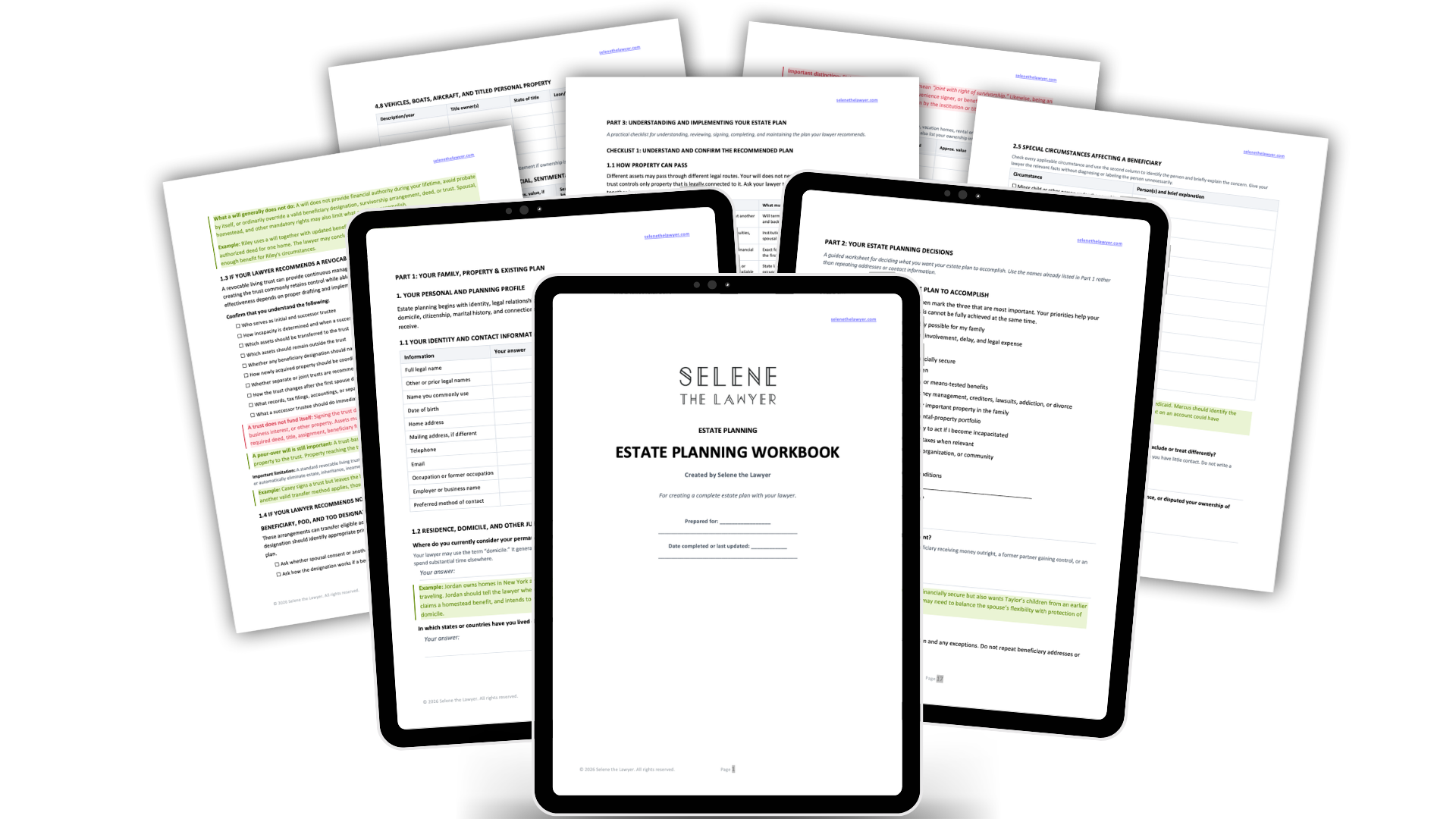
That’s why all the moving parts, including your will, your trust, and your operating agreement, need to be set up to work together. My estate planning workbook walks you through exactly where those gaps tend to hide.
Factor 4: Beneficiary Complexity
This is where family dynamics come in, and where a trust can get really strategic.
Let’s say Mia has an 18-year-old son. She loves him, but she knows he won’t be ready to manage a six-figure account the day he turns 25. Or maybe she has a 30-year-old daughter struggling with addiction, and handing her a large lump sum could be a real risk.
In situations like that, a trust can hold the money and release it according to the conditions you set. And you can get creative with those conditions.
For example, Mia could appoint her sister, someone she trusts, as trustee, and give her full discretion over the timing of distributions. Or she could tie distributions to milestones: 30% at age 25, another 30% at 35, and the final 40% at 45.
You can also plan across generations. Say Mia wants 70% to go directly to her two children, and the remaining 30% to her three grandchildren, released only once each grandchild turns 30. That kind of structure is very hard to build with a will alone, and it’s exactly what a trust is for.
There’s one more angle here that I find really interesting, which is divorce-proofing.
Say Mia has another daughter, 30 and responsible with money, who is now engaged. Mia is fine with the fiancé, maybe not thrilled, but fine, and she has a hunch the relationship might not last.
If Mia leaves the inheritance to her daughter outright and she later divorces, that money can become part of the divorce settlement. If Mia leaves it in a trust instead, it stays her daughter’s money. That choice is completely up to you.
Factor 5: Privacy
A will becomes part of the public record once it goes through probate. A trust generally stays private.
For a lot of people, that one factor alone tips the decision toward a trust.
The Disadvantages of a Trust
I said there were 5 factors, but there’s one more I have to mention, because it’s where people get tripped up. Call it simplicity versus complexity, or just the honest disadvantages of a trust.
A will is largely a set-it-and-forget-it document. A trust asks more of you.
Going the trust route means you always have to retitle your home, your investment properties, and your other assets into the trust. And every future purchase has to be retitled into the trust’s name too.
Remember that expensive empty box? Too many Americans set up a trust and never actually move their assets into it, which leaves the trust close to useless.
So if you go the trust route, review your trust and your assets every year or two to make sure it’s genuinely working for you.
Will vs Trust: The Pros and Cons, Simplified
If you want the will vs trust pros and cons in one place, here’s the short version.
A will:
Simpler and cheaper to set up
Largely set-it-and-forget-it
Still sends your estate through probate
Becomes public record
A trust:
Avoids probate for whatever you fund into it
Keeps things private
Lets you control timing, conditions, and multi-generational gifts
Requires ongoing work to retitle assets, and does nothing if you skip that step
Neither one wins for everybody. The right answer depends on your assets, your family, and your state.
So, to settle the trust vs will debate…
Here’s the takeaway. Your net worth does not decide whether you need a will or a trust. Mia’s situation breaks that myth pretty cleanly, and Sarah’s shows that not every American needs a trust either.
It comes down to three things: your personal assets, your family dynamics, and your state’s laws.
So what’s your next step?
First, download my free Estate Planning Workbook. It walks you through all of your assets, your family situation, and your goals, so nothing slips through the cracks.
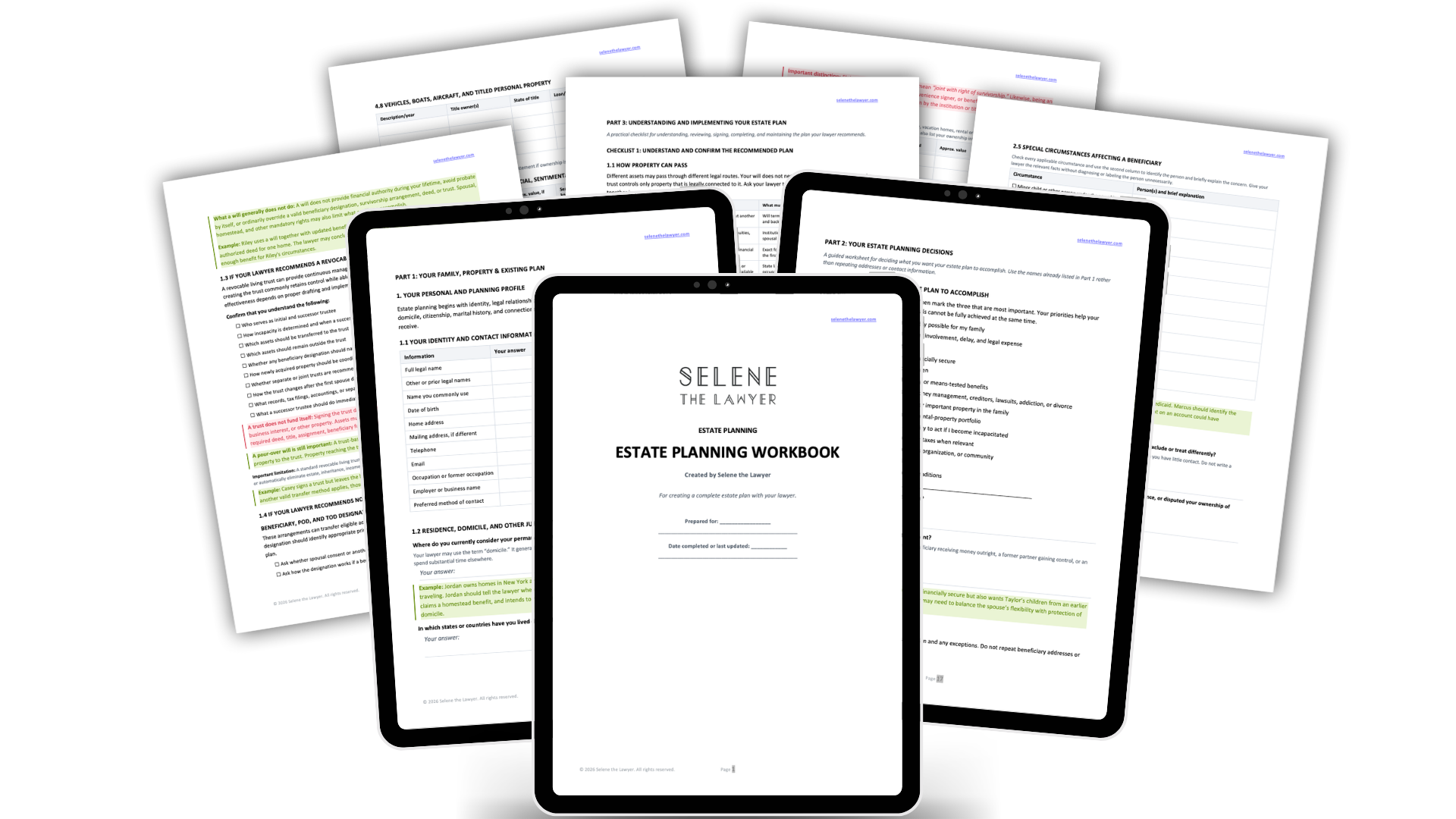
Then take that workbook to an estate planning attorney licensed in your state, and have them build the right plan for you. You’ll walk in prepared, and you’ll know exactly what to ask.
And if you’re an attorney or financial advisor reading this, take a look at the workbook too. Feel free to share it and this post with your clients.