Trying to figure out how to start an online coaching business the right way (without overpaying on stupid things you don’t need)? Starting an online coaching business is surprisingly straightforward (and inexpensive) — but only if you make the right decisions before you launch.
As a lawyer for coaches, I’ve seen too many beginners rush into building websites, creating courses, or investing in expensive tools without first deciding what they’re actually selling and how their business will operate.
In this guide, I’ll walk you through how to start an online coaching business in 10 practical steps, covering your offer, structure, online coaching platforms, tools, checkout process, and the legal basics you need. This is the ultimate guide on how to start an online coaching business for beginners.
By the end, you’ll know exactly what needs to be in place before you start taking payments.
This post is all about how to start an online coaching business the right way, so you can launch with structure instead of guesswork.
👉 Before you launch, download my free Coaching Business Checklist to make sure you’ve made the right decisions about your offers, pricing, boundaries, and terms.
How to Start an Online Coaching Business
How to Start an Online Coaching Business for Beginners
1. Focus on Only These 2 Core Offers (Start Simple)

Before you look at online coaching platforms, build a website, or think about payment tools, you need clarity on one thing: What exactly are you selling?
If you’re searching for how to start an online coaching business, the biggest mistake you can make is trying to launch five things at once.
Right now, your goal is to make money, validate demand, and sharpen your skills.
For most beginners, that means starting with two core offers:
One-off coaching calls, and
One structured 1-on-1 coaching program.
That’s all you need right now.
I see too many beginners waste time on:
Structuring a full-on coaching program when they don’t even have clients yet.
Spending three months trying to create a full online course.
Writing a paid eBook that no one will buy because no one knows who they are yet.
If you’re starting an online fitness coaching business, for example, that could be:
A 60-minute strategy session with a clear action plan, or
A 6-week personalized training program with defined outcomes.
Once those two offers work — once people are paying and getting results — you can expand into group programs or courses.
That’s also exactly why I created the Basic Coach Contracts Bundle. It’s designed for beginners who are offering one-off calls and a 1-on-1 coaching program and want the right structure in place from day one.
👉 I’ve created a step-by-step free Coaching Business Checklist that walks you through the exact decisions you need to make for your one-off call and 1-on-1 program.
2. Structure Each Offer Before You Sell It
Once you’ve decided on your two core offers, the next step is to structure them properly.
This is where many new coaches underestimate the work. They think they have an offer because they know what they have the program down.
But before you take payments, you need to make operational decisions for each offer.
If you’re offering a 1-on-1 coaching program, you need to decide:
How is your 1-on-1 coaching structured? Is it a fixed-length program (e.g., 6 or 12 weeks) or ongoing monthly coaching with no fixed end date?
How many sessions are included?
How long is each session?
Where are sessions held? (Zoom or another platform?)
How do clients book sessions? Will you use Calendly, Acuity, or other online coaching platforms?
On which days and during which hours do you coach?
Are check-ins included between sessions? If so, how often and through which platform?
Are materials included (workbooks, templates, audits)?
What is not included? (We’ll get into boundaries in Step 8.)
Can sessions be rescheduled? If so, until when? 24, 48, or 72 hours before the session? And how often?
How late may a client be to each session before it is cancelled?
Do you charge a fixed program fee or a monthly fee? Is it paid in full upfront or monthly in advance?
Are refunds offered? If so, under what conditions?
These decisions shape your entire online coaching business.
And once those decisions are made, you need a proper 1-on-1 coaching agreement to make those rules legally enforceable.
For a one-off coaching session, you need to decide:
What kind of session is it (strategy call, audit, clarity session, etc.)?
How long does it last?
Where does it take place?
What is your fee per session?
Through what platform can they be rescheduled?
How late may a client be to a session before they’re considered a no-show?
Are refunds offered (if cancelled far enough in advance)?
Even one single session needs clear rules and boundaries.
That’s exactly why I created the Virtual Meeting Policy Template — it covers cancellations, lateness, refunds, and liability boundaries for single sessions.
👉 My free Coaching Business Checklist includes all of these decisions in one place — plus the possible structures you can choose from. It sets out exactly how to start an online coaching business from home.
3. Set Up the Legal Foundation
Once your offers are structured, it’s time to make your online coaching business official!
Even if you’re starting small and running your business from home, you need a proper legal structure in place to protect yourself and your personal assets.
For most beginners in the U.S., that means forming a single-member LLC online.
You do not need to overcomplicate this. And you definitely don’t need to hire a lawyer to file something as straightforward as a single-member LLC.
What you do need is:
A business name that is actually available (not just the domain name, but also legally in your state)
A registered legal entity using a formation service like ZenBusiness (for $0 + state fees).
A separate business bank account (it’s absolutely crucial to separate your personal and business finances).
I’ve created a step-by-step guide to help you set up your LLC and business bank account in my complete guide on How to Legally Start a Business in 9 Simple Steps (Without Wasting Money).
If you truly don’t have startup capital yet, I’ve also written a separate guide on How to Start an Online Business With No Money: 7 Steps to Get Paying Clients First, where I explain how to validate demand first before forming your entity.
That’s how to start an online coaching business the right way.
4. Start With a Small Beta (If You Truly Have No Clients Yet)

If you’re starting from zero and haven’t worked with anyone yet, you need to build social proof — in other words, get your first few real clients.
The fastest way to do that is by creating a small beta phase. You sign 3–5 beta clients at a reduced rate and, in exchange for that discount, ask for a strong testimonial.
Your beta clients could be:
Friends, family & even former colleagues who already trust you
Followers who have been engaging with your content
People in relevant Facebook groups or online communities who are actively asking for help
If you’re truly at the very beginning and still figuring things out, you can choose to offer your beta for free in exchange for detailed feedback and a testimonial. But treat it like a real program. Free does not mean casual.
Even during beta, define:
The exact length of the program
The number of sessions
What is included
The price (even if discounted)
And even if someone is paying very little—or nothing at all—it’s still a coaching relationship. Even if you offer it for free, it’s still not risk-free for you. Use a proper 1-on-1 coaching agreement, even during your beta phase.
The goal of a beta phase is to validate demand, refine your delivery, and collect testimonials.
Once you’ve worked with a few real clients and your offer feels solid, you can scale your offer and properly market it.
5. Build a Simple Coaching Website
Once your offers are structured and your legal foundation is in place, you need a place where people can actually find you and book you quickly and easily.
That means you need a website.
That’s really how to start an online coaching business.
And you do not need a custom-designed website. But you also don’t want to use an ugly WordPress website.
Use Squarespace, the Apple of website builders.
Yes, that is an affiliate link, and I do receive a commission if you sign up through it, but the fact of the matter is that it’s beginner-friendly and affordable (unlike a Stan Store that you don’t even own).
You can launch a professional-looking coaching website in a weekend. Really. Don’t spend more time on it than that.
At the beginning, your website only needs five things:
A clear homepage that explains who you help and what you offer
A short “About Me” page
One strong sales page for your 1-on-1 coaching program
One sales page linking to your paid scheduler for your one-off calls
And proper website legal pages, including a privacy policy, terms of use, and a disclaimer page
That’s it.
On your sales pages, clearly explain:
What is included
What the client will get out of it (but don’t promise specific results)
Social proof (your testimonials from your (beta) clients)
The price
A purchase button
If someone has to email you to understand what you offer, your page is not clear enough.
6. Make It Easy to Buy
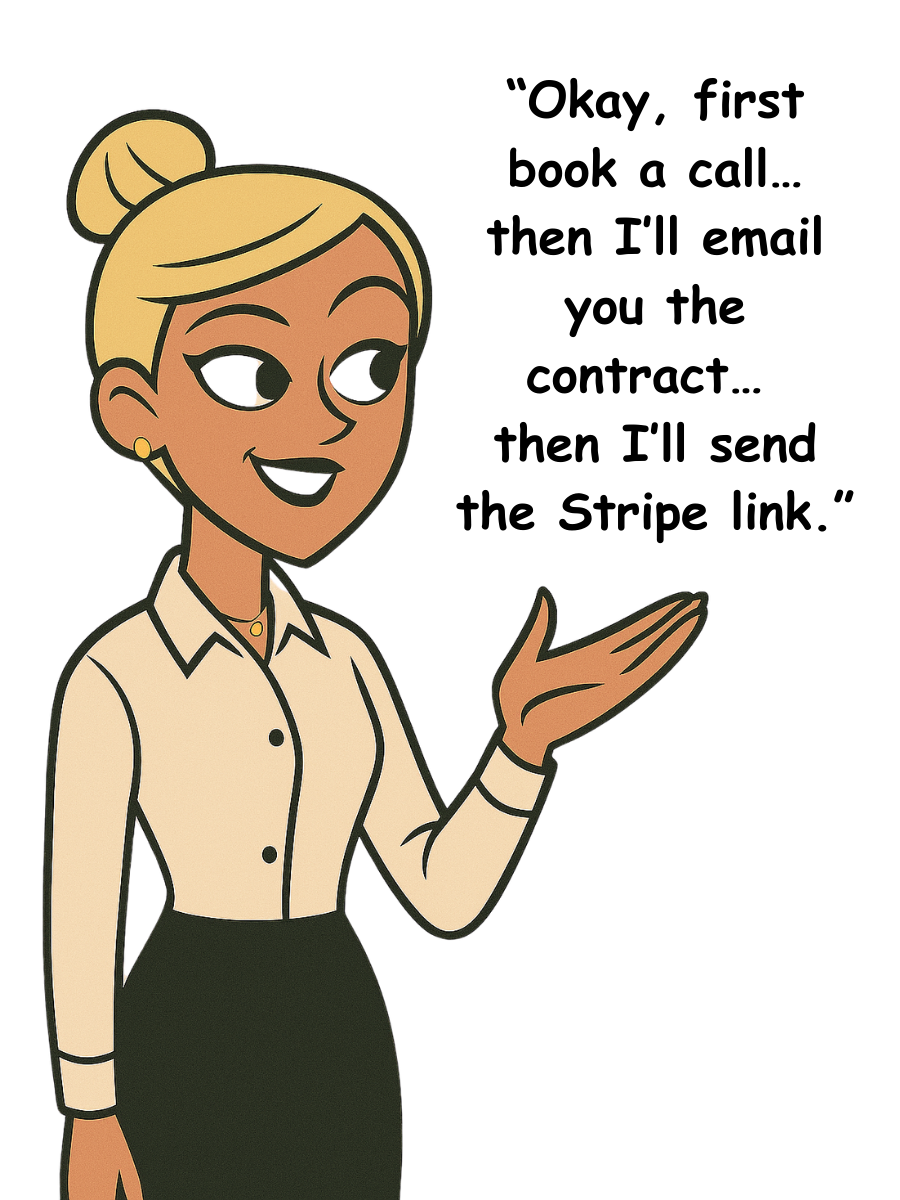
One of the biggest mistakes I see with beginners who offer coaching is overcomplicating the onboarding process.
They ask people to:
Book a discovery call.
Wait for a contract by email.
Receive a separate Stripe link.
Manually confirm payment.
That’s four opportunities for someone to lose interest. And as a beginner, you can’t afford to lose potential income.
If you want to get paid quickly and painlessly (while being protected by a binding agreement), make it easy to say yes.
Your checkout process should be simple:
A clear sales page
A purchase button that links directly to a checkout page (or, if it’s a one-off call, a paid scheduler (like Calendly) that collects payment upfront)
A checkout page that includes your coaching agreement in a terms and conditions format (or your virtual meeting policy for one-off calls)
Immediate upfront payment and a legally binding agreement at checkout
That’s it. Super simple process with minimal friction.
This is so important when you’re learning how to start an online coaching business for beginners. At this point, you can’t be picky and vet your coaching clients in a discovery call. Your sales page should be doing the filtering for you. You need a clean system that pays you immediately.
7. Choose the Right Online Coaching Platforms (Keep It Simple)
When people research how to start an online coaching business, they often fall into a tech rabbit hole.
Kajabi. Teachable. Thinkific. Slack. Notion. Zapier. Funnels. Automations.
You don’t need most of that right now.
If you’re starting with one-off calls and a 1-on-1 coaching program, your tech stack can be extremely simple.
At the beginning, you really only need:
Squarespace, which integrates payment processors, like Stripe and PayPal, or another simple website builder
Zoom (or another video platform, but, really, everyone uses Zoom)
A scheduler like Calendly or Acuity
An email tool
A messaging tool for check-ins, like WhatsApp or Slack, or just text if your clients are in the same country
That’s enough to run a clean and professional online coaching business from home.
Platforms like Kajabi, Teachable, or Thinkific make sense later — when you decide to build a full online course, membership, or group program. But building that infrastructure before you have consistent paying clients usually leads to wasted time and unnecessary expenses.
The goal at this stage is to keep your setup lean and focus on revenue.
8. Set Online Boundaries From Day One

The thing about running an online coaching business is that if you don’t set boundaries, you’ll be on call 24/7.
And my goal here is not just to tell you how to start an online coaching business — I want you to keep it.
And to keep your coaching business, you need to nip nonstop access in the bud, so clients can’t keep messaging you whenever they feel like it and expect you to respond immediately.
If you don’t set boundaries early, clients will create their own.
That’s why you need to state:
Your business days and hours, and that support is limited to those hours (no responding to late-night voice notes or “quick questions” that turn into 30-minute weekend conversations)
Your response timeframe (24 hours? 48 hours? 72 hours?)
If you provide check-ins, when you will check in with them — not the other way around
What kind of behavior is not acceptable
Set expectations early. It’s much harder to tighten boundaries later.
And use a solid coaching agreement that clearly states those boundaries, so your clients are legally bound by your rules.
That’s how to build a successful coaching business.
Especially if you’re learning how to start an online coaching business from home, boundaries matter even more. Your home is not your 24/7 office.
9. Protect Your Business and Boundaries with the Right Terms
The final step is putting the right legal terms in place.
Just like forming an LLC, you don’t need an expensive lawyer to draft custom contracts for you — especially not at the beginning.
But you do need the right documents.
Let me explain which ones and why they matter.
1. Website Legal Pages
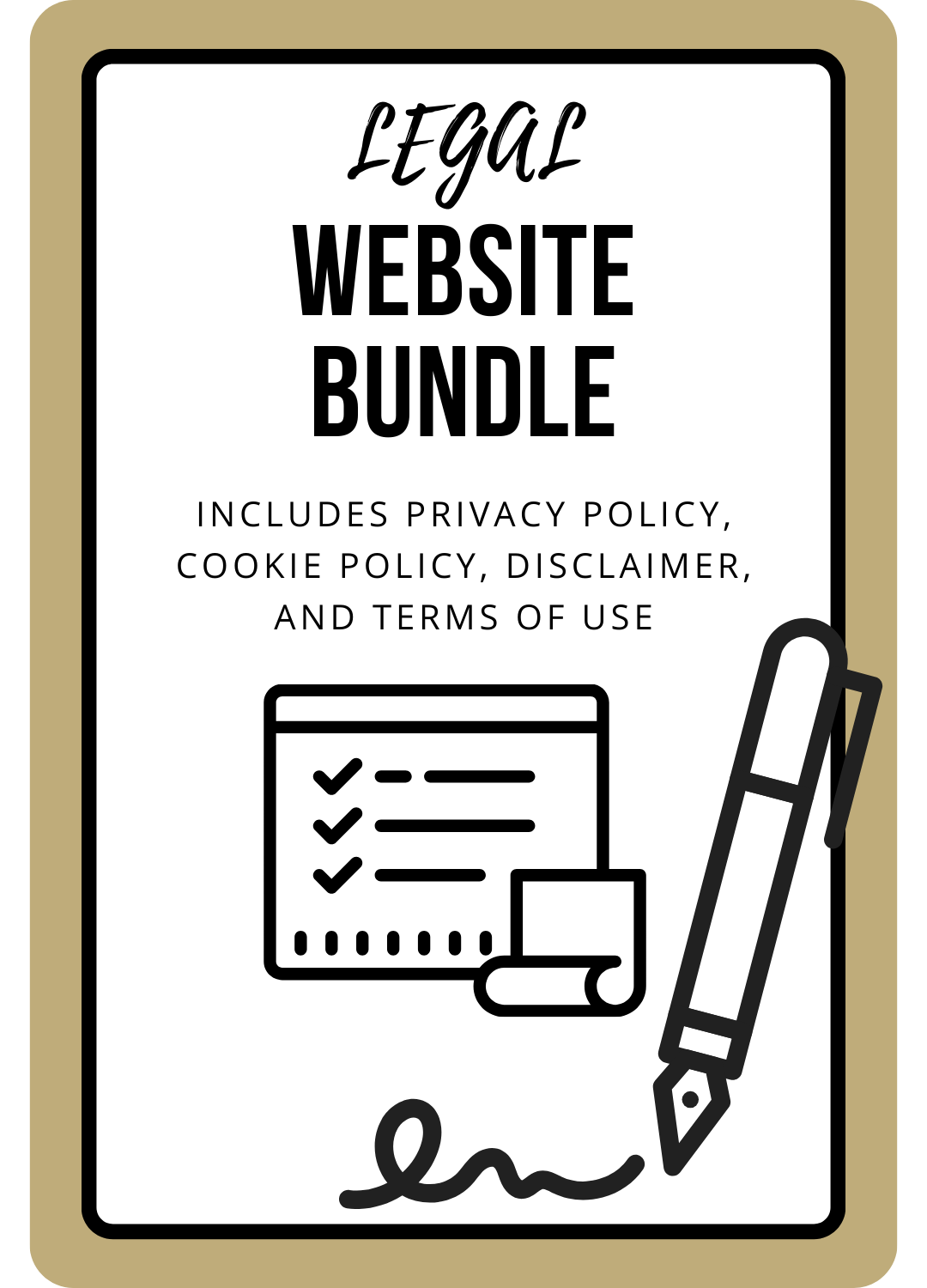
When you run a website, you need three basic legal pages:
A Privacy Policy, which is legally required if your website collects names, email addresses, or even just uses cookies (which it does).
Website Terms and Conditions (also called Terms of Use), which protect your content and limit your liability for how people use your website.
A Disclaimer Page, which protects you from claims based on what you publish on your site.
As a coach — especially in health, fitness, business, career, or financial niches — your disclaimer should clearly state:
Nothing on your website constitutes regulated professional advice,
Results shown on your site are not guaranteed, and
Clients remain fully responsible for their own decisions and actions.
These essentials (and more) are included in my Legal Website Bundle, fully customizable to your online coaching business and niche.
2. Virtual Meeting Policy (For One-Off Calls)
When you offer one-off calls, you’ll need a virtual meeting policy that:
makes the boundaries you set legally enforceable,
sets a legally binding rescheduling & cancellation policy, so clients can’t hijack your calendar,
sets an enforceable refund policy, so you don’t lose money if they cancel 5 minutes before your session,
includes disclaimers that clearly state you are not providing regulated professional advice, you will not execute anything on their behalf, and they are still fully responsible for their own decisions and actions, and
limits your liability, so they can’t actually make claims against you for unrealistic expectations and potential liability.
My Virtual Meeting Policy includes all of these protections, so your time, boundaries, and income are protected from day one.
3. 1-On-1 Coaching Agreement
For a full-on coaching program, you’ll need an ironclad coaching agreement (or terms and conditions) stating that:
defines the limits of your scope, so clients can’t ever ask for more than what they’ve paid for,
protects your intellectual property, so clients can’t steal your coaching methods and strategies and any materials, like eBooks or workbooks, to resell or start their own coaching programs,
sets clear payment terms that ensure that you don’t need to provide any services if clients don’t pay upfront and on time,
sets ironclad cancellation and rescheduling policies that ensure clients can’t keep rescheduling sessions all the time, and sessions won’t roll over,
set a solid refund policy that ensures clients don’t get refunds if they cancel at the last minute or don’t use all of their sessions,
puts obligations on your clients to cooperate and behave appropriately so you can actually work with them, and
includes strong disclaimers and limitations of liability, so you won’t lose your money and business.
My fully customizable 1-on-1 Coaching Agreement — along with the other legal essentials — is included in my Coach Contracts Bundle, so you have everything you need to start properly.
10. Market Your Coaching Business Strategically (Without Paid Ads)
You can have the best coaching offer in the world — but if no one sees it, it won’t sell.
If you’re learning how to start an online coaching business from home, the good news is that you don’t need paid ads to get started.
Right now, the fastest way to build visibility is short-form content. TikTok can give you reach much faster than SEO in the beginning.
There is plenty of free advice online about how to write hooks, structure content, and grow organically. You don’t need a course to start.
At the same time, don’t rely on one platform. You don’t want to put all your eggs in one basket, because algorithms change, reach fluctuates, and platforms shut down accounts.
That’s why I strongly recommend combining short-term reach with long-term traffic.
For me, that has been blogging.
Most of my website traffic comes from SEO. Blogging is far from dead. In fact, it’s highly underused — especially by coaches.
I learned my SEO strategy from Sophia Lee's course, Perfecting Blogging. I’m not sponsored by her or receive affiliate commissions. I just love her course, and it’s worked for me, so I have to give credit where it’s due. She also has a Pinterest course, Perfecting Pinterest, which I recommend if you want to amplify your content.
If you’re just starting, focus on:
Blogging with SEO
Pinterest
TikTok
Personally, I recommend starting with blogging. Your blog posts can feed your TikTok content, and Pinterest works best when you have blog posts to link to.
That’s how to start an online coaching business from home and grow it without relying on paid ads.
That’s How to Start an Online Coaching Business from Home
Now you know exactly how to start an online coaching business.
If you focus on two core offers, set up your legal foundation, keep your tech simple, protect your boundaries, and put the right terms in place, you’re already ahead of most beginners.
Just follow these simple steps, and you’re ready to build and grow a successful online coaching business!
👉 Before you launch, download my free Coaching Business Checklist to make sure you’ve made the right decisions about your offers, pricing, checkout process, and legal terms.
And when you’re ready to put those decisions into legally binding documents, my Coach Contracts Bundle includes your 1-on-1 Coaching Agreement, Virtual Meeting Policy, and Website Legal Pages — everything you need to start properly.
This post was all about how to start an online coaching business the right way in 10 crucial steps.
Other posts you may like: